Editor's Note, Volume 10 Issue 3


D’Arcy Little, MD, CCFP, FCFP, FRCPC Medical Director, JCCC and HealthPlexus.NET
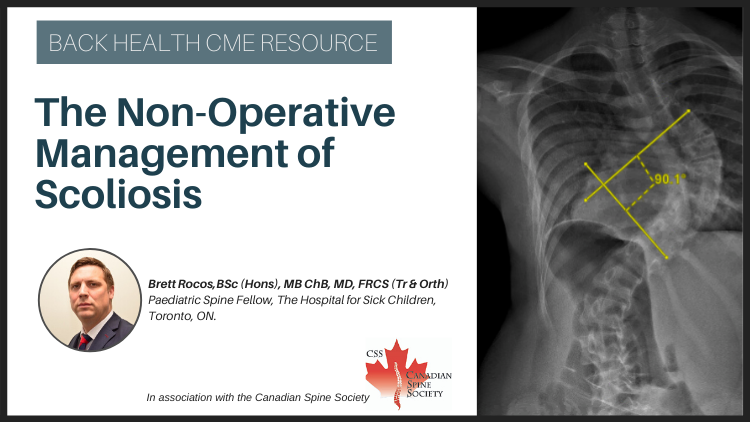
Brett Rocos, BSc (Hons), MB ChB, MD, FRCS (Tr & Orth),
Paediatric Spine Fellow, The Hospital for Sick Children, Toronto, ON.
CLINICAL TOOLS
| Abstract:Scoliosis is a common condition that every primary care provider will encounter. There are many treatments available in its management, including observation, physical therapy, pain management strategies, casting, bracing and surgery. In this narrative review, the roles of each of the non-operative strategies in managing adult and paediatric scoliosis are explored, and the evidence supporting each is summarised. Scoliosis affects people at every stage of life, and an understanding of the treatments available will aid in counselling patients and making appropriate referrals. |
| Key Words: Scoliosis, conservative, paediatric, bracing, physiotherapy, alternative therapies, spine cast. |
Members of the College of Family Physicians of Canada may claim MAINPRO-M2 Credits for this unaccredited educational program.
www.cfpc.ca/Mainpro_M2
You can take quizzes without subscribing; however, your results will not be stored. Subscribers will have access to their quiz results for future reference.

| • Scoliosis is common |
| • Most patients require observation only |
| • Patient information is essential |
| • Casting and bracing have roles in the growing skeleton only |
| • Physical therapy has limited evidence in both adult and paediatric deformity |
| • Alternative therapies have no proven use in the management of scoliosis |
| The majority of patients with scoliosis can be observed |
| Reliable patient information is critical |
| There is limited evidence that physiotherapy is effective, and no evidence that alternative therapies are effective in treating scoliosis |
| To have access to full article that these tools were developed for, please subscribe. The cost to subscribe is $80 USD per year and you will gain full access to all the premium content on www.healthplexus.net, an educational portal, that hosts 1000s of clinical reviews, case studies, educational visual aids and more as well as within the mobile app. |
Dr. Alykhan Abdulla, BSC, MD, LMCC, CCFPC, DipSportMed CASEM, FCFCP, CTH (ISTM), CCPE, Masters Cert Phys Leader, ICD.D
Assistant Professor University of Ottawa Faculty of Medicine, Academic Clinical Professor University of Ottawa Faculty of Nursing Medical Director The Kingsway Health Centre, The Kingsway Travel Clinic, The Kingsway Cosmetic Clinic, Beechwood Medical Cosmetic Physio Pharmacy, Editor in Chief/Author Journal of Current Clinical Care SPORTS MEDICINE, Vice Chair Section of General and Family Practice Ontario Medical Association, Board Director Eastern Ontario Regional Lab Association, Bruyere Foundation
CLINICAL TOOLS
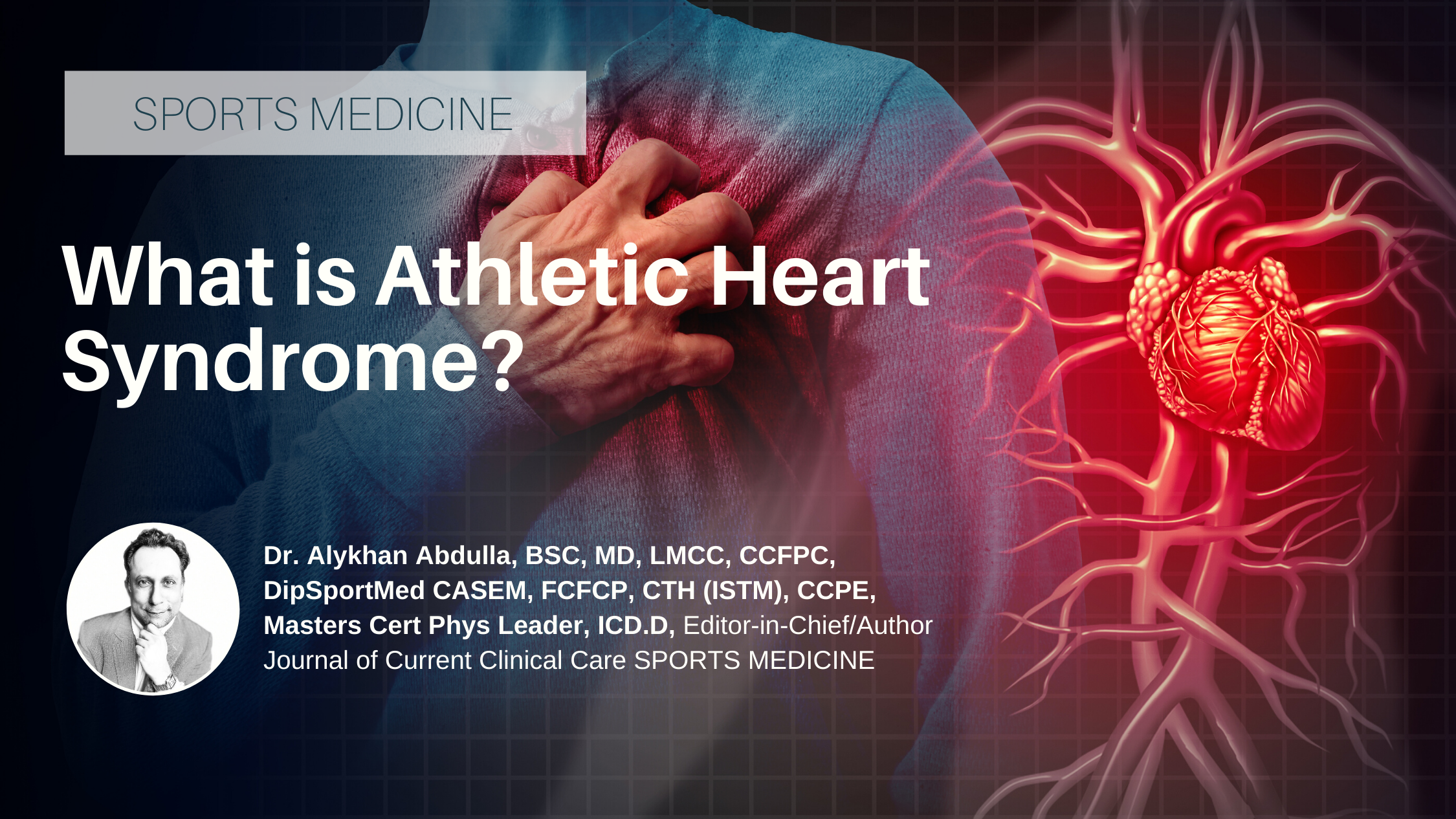
| Abstract: A common term for an enlarged heart that is associated with repeated strenuous exercise is athletic heart syndrome (AHS). This article reviews AHS, other serious conditions that appear similar to AHS, and how to identify a young athlete at risk for sudden cardiac death. |
| Key Words: athletic heart syndrome, enlarged heart, strenuous exercise, sudden cardiac death. |

| The changes in heart structure and function seen in athletic heart syndrome would suggest illness if seen in non-athletes. |
| When abnormalities in heart structure or function are detected in an athlete, it is important to ensure the abnormalities are indeed due solely to exercise conditioning, and not to a cardiac disorder. |
| Consider a clinical history of drug abuse, the use of anabolic steroids, recent viral infections and very tall athletes with arachnodactily or an arm span greater than their height. |
| Clinically suspicious athletes need to go for further testing. |
| To have access to full article that these tools were developed for, please subscribe. The cost to subscribe is $80 USD per year and you will gain full access to all the premium content on www.healthplexus.net, an educational portal, that hosts 1000s of clinical reviews, case studies, educational visual aids and more as well as within the mobile app. |
I have always said the being a doctor is a mixed blessing.
...