
Editor's Note, Volume 6 Issue 5

D’Arcy Little, MD, CCFP, FRCPC
Medical Director, JCCC and HealthPlexus.NET

D’Arcy Little, MD, CCFP, FRCPC
Medical Director, JCCC and HealthPlexus.NET
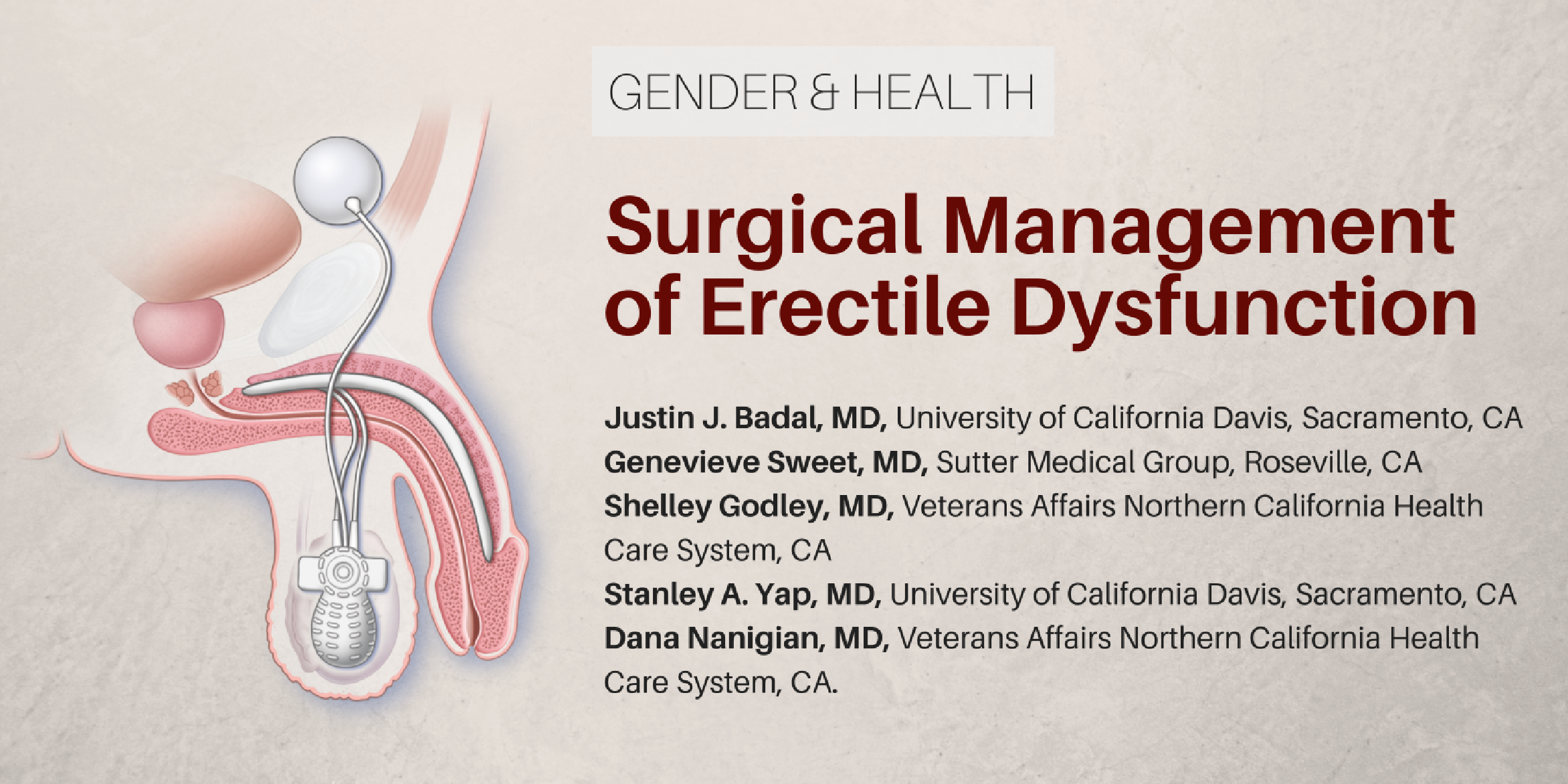
Justin J. Badal, MD,1 Genevieve Sweet, MD, 2Shelley Godley, MD,3Stanley A. Yap, MD,4Dana Nanigian, MD, 5
1Department of Urology, University of
California Davis, Sacramento, California.
2Department of Urology, Sutter Medical Group,
Roseville, California.
3Department of Urology, Veterans Affairs
Northern California Health Care System, Sacramento,
California.
4Department of Urology, University of California
Davis, Sacramento, California and Department of Urology,
Veterans Affairs Northern California Health Care System,
Sacramento, California.
5Chief of Urology, Department of Urology,
Veterans Affairs Northern California Health Care System,
Sacramento, California.
| Abstract: Erectile dysfunction (ED) is one of the most common sexual disorders affecting men. Discussion regarding erectile function, diagnosis, and management of the disease typically begins at the primary care level. A broad understanding of the basic causative factors and initial treatment regimens gives primary care physicians the ability to treat ED. An enhanced understanding of surgical options allows for referrals to be made to urologists for advanced surgical treatment of ED in patients who have failed medical therapies. Initial diagnosis and continued workup can be performed prior to consultation with a surgical specialist. Detailed here are different causes of ED as well as their respective studies to enhance initial surgical evaluation. |
| Key Words:erectile dysfunction, diagnosis, management, treatment. |
Members of the College of Family Physicians of Canada may claim MAINPRO-M2 Credits for this unaccredited educational program.
www.cfpc.ca/Mainpro_M2You can take quizzes without subscribing; however, your results will not be stored. Subscribers will have access to their quiz results for future reference.
| A thorough discussion regarding the irreversibility of penile implants is strongly recommended with the patient before proceeding. |
| Inflatable penile prosthetics avoid the effect of the constant erection created by malleable implants. |
| Partner satisfaction is highest with the inflatable penile prosthesis. |
| The inflatable penile prosthesis is the most preferred among men. |
| Adverse events/complications associated with SNM use include: pain at the implantation site, lead migration, wound-related complications, bowel dysfunction, infection, and generator problems. |
| Postoperative outcomes can be improved with detailed counseling in regards to modifiable risk factors, such as achieving appropriate glycemic control. |
| Candidates for revascularization therapy should be carefully selected, with those who are younger and have sustained pelvic trauma having the best outcomes. |
| To have access to full article that these tools were developed for, please subscribe. The cost to subscribe is $80 USD per year and you will gain full access to all the premium content on www.healthplexus.net, an educational portal, that hosts 1000s of clinical reviews, case studies, educational visual aids and more as well as within the mobile app. |
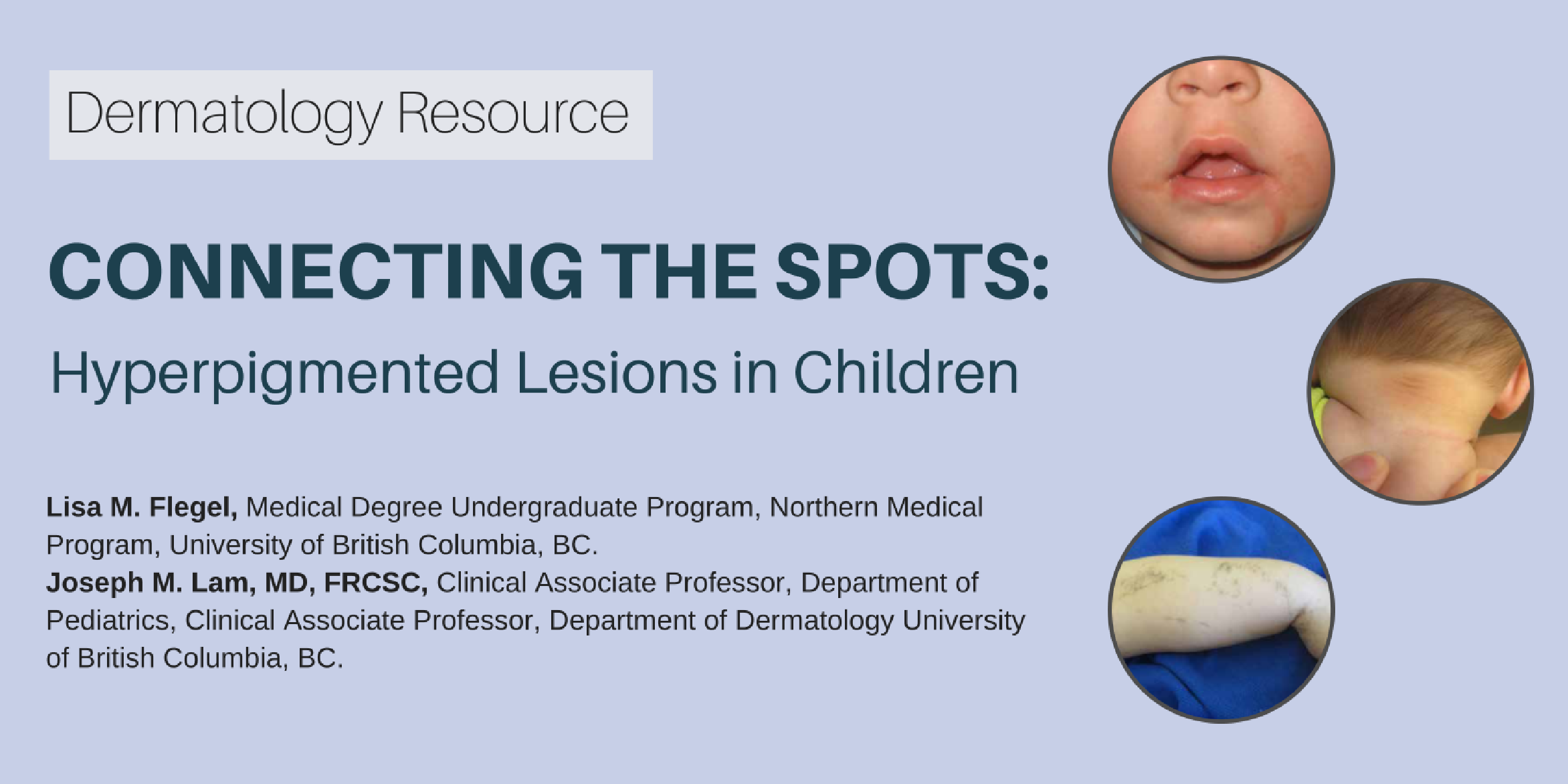
Lisa M. Flegel,1 Joseph M. Lam, MD, FRCSC,2
1Medical Degree Undergraduate Program, Northern Medical Program, University of British Columbia, BC.
2Clinical Assistant Professor, Department of Pediatrics and Dermatology, University of British Columbia, BC.
| Abstract: Hyperpigmented lesions are common in the pediatric population and identifying their etiologies can be challenging for physicians. Patients and caregivers may worry that hyperpigmented lesions are dangerous, associated with an internal illness or that they may lead to skin cancers. Having a better understanding of the causes and natural histories of these lesions may help to guide management and alleviate worry. This review article will provide an overview of select common and uncommon causes of hyperpigmented skin lesions in children. |
| Key Words: hyperpigmentation, pediatric. |
| 1. Most hyperpigmented lesions in children do not require treatment aside from for cosmesis. |
| 2. Features of malignant melanoma in children include: non-pigmented, uniform color, variable diameter, nodular lesions, and occurring de novo. |
| 3. Parents and children should be warned that melanocytic nevi will grow as their child grows, but growth should be proportionate. |
| 4. The risk of melanocytic nevi becoming malignant melanoma in children is very small. |
| In children with numerous melanocytic nevi, a good rule of thumb is to look for the 'ugly duckling' mole. |
| To track lesions over time, parents can develop a routine of taking a picture each year on the child's birthday. |
| To have access to full article that these tools were developed for, please subscribe. The cost to subscribe is $80 USD per year and you will gain full access to all the premium content on www.healthplexus.net, an educational portal, that hosts 1000s of clinical reviews, case studies, educational visual aids and more as well as within the mobile app. |
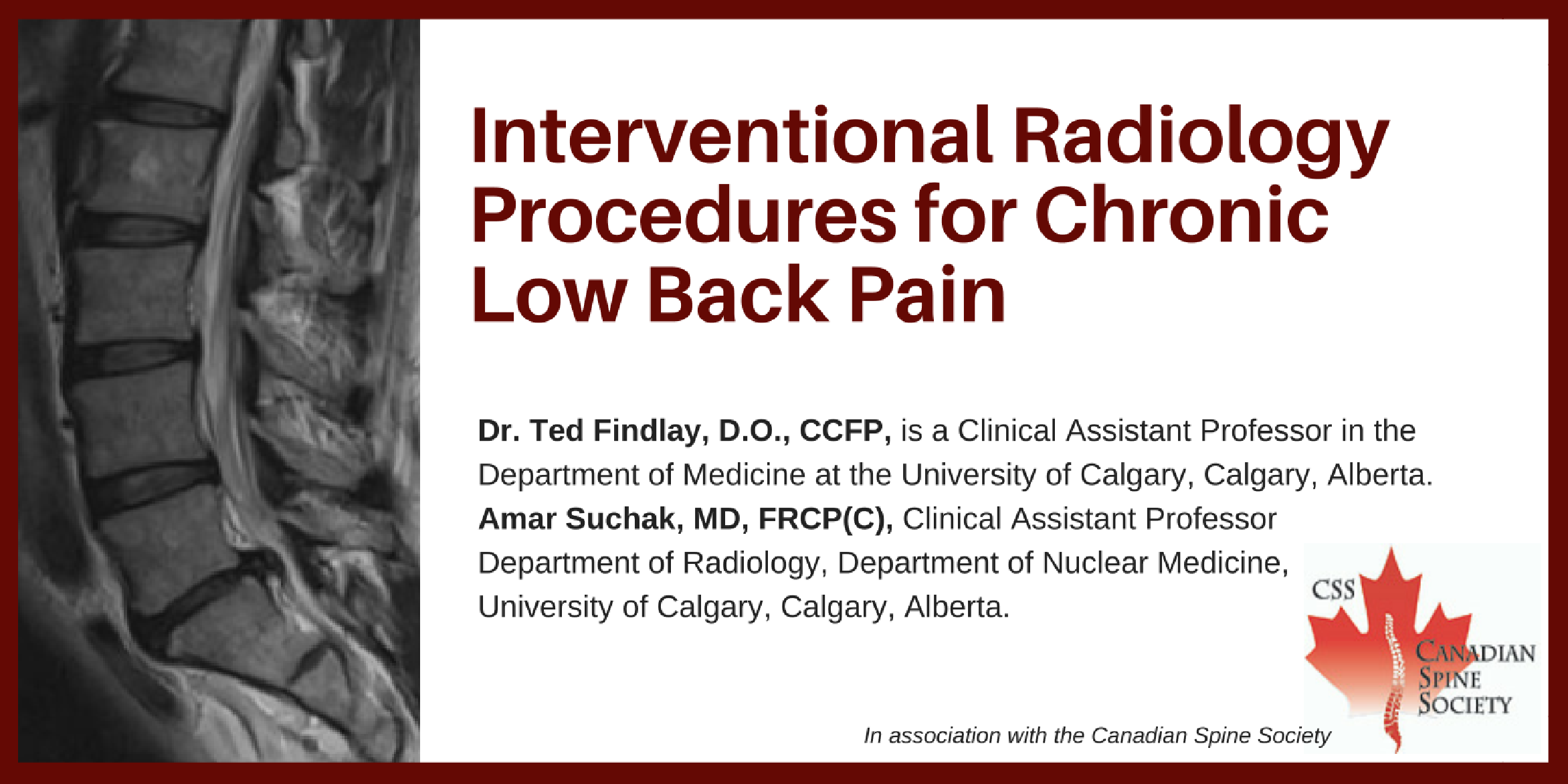
Dr. Ted Findlay, D.O., CCFP,1 Amar Suchak, MD, FRCP(C), 2
1is a Clinical Assistant Professor in the
Department of Medicine at the University of Calgary. He is
also in a Private Family Medicine practice. In addition he
is on Medical Staff at Alberta Health Services, Calgary
Zone in Calgary, Alberta.
2Clinical Assistant Professor Department of
Radiology, Department of Nuclear Medicine, University of
Calgary, Calgary, Alberta.
| Abstract: There is an increasing availability and clinical use of interventional radiological techniques for patients with low back pain. This can be a valuable additional tool in the management of low back pain that has not responded to conservative treatment. However, the clinical indications and appropriate uses as well as cautions that apply to this treatment modality are in many cases less well understood by the primary care practitioner. The objective of this article is to review clinical scenarios in which these procedures are commonly considered, as well as their limitations. The field of interventional radiology is one that is rapidly evolving and an area of active clinical research. It is important for the primary care practitioner to have a basic understanding of the current state of the art in order to have an informed discussion with their patients who may be seeking advice on this treatment option. |
| Key Words: Low back pain; treatment; interventional radiology definitions; interventional radiology indications; interventional radiology complications. |
Members of the College of Family Physicians of Canada may claim MAINPRO-M2 Credits for this unaccredited educational program.
www.cfpc.ca/Mainpro_M2You can take quizzes without subscribing; however, your results will not be stored. Subscribers will have access to their quiz results for future reference.
| 1. In patients carefully selected by clinical and radiological examination, there can be satisfying clinical gains from the use of currently available interventional radiologic procedures. |
| 2. One must not assume that abnormal findings on radiologic imaging immediately explains the anatomical cause of a patient's low back pain; a corresponding accurate history and physical examination is ideal prior to commencing injections. |
| 3. When successful, the gains from radiological interventions should be considered one portion of a broader clinical treatment plan, rather than the entire plan of management. |
| 4. Unsuccessful interventional procedures should not be repeated. |
| 1. Do not apply repeated interventional procedures with an expectation that one of them will find the target source of the patient's low back pain. |
| 2. Although they may be uncommon, interventional radiology risks can occur and the referring physician should be cognizant of these dangers that accumulate with repeated interventions. |
| To have access to full article that these tools were developed for, please subscribe. The cost to subscribe is $80 USD per year and you will gain full access to all the premium content on www.healthplexus.net, an educational portal, that hosts 1000s of clinical reviews, case studies, educational visual aids and more as well as within the mobile app. |


One always hopes that as medical practitioners, we will be able to focus our attention on the medical issues faced by seniors and help families cope with the fears, disappointments and tragedies that are faced by loved ones in the midst of what are often life-altering illnesses.


