
Editor's Note, Volume 7 Issue 3

D’Arcy Little, MD, CCFP, FRCPC
Medical Director, JCCC and HealthPlexus.NET

D’Arcy Little, MD, CCFP, FRCPC
Medical Director, JCCC and HealthPlexus.NET
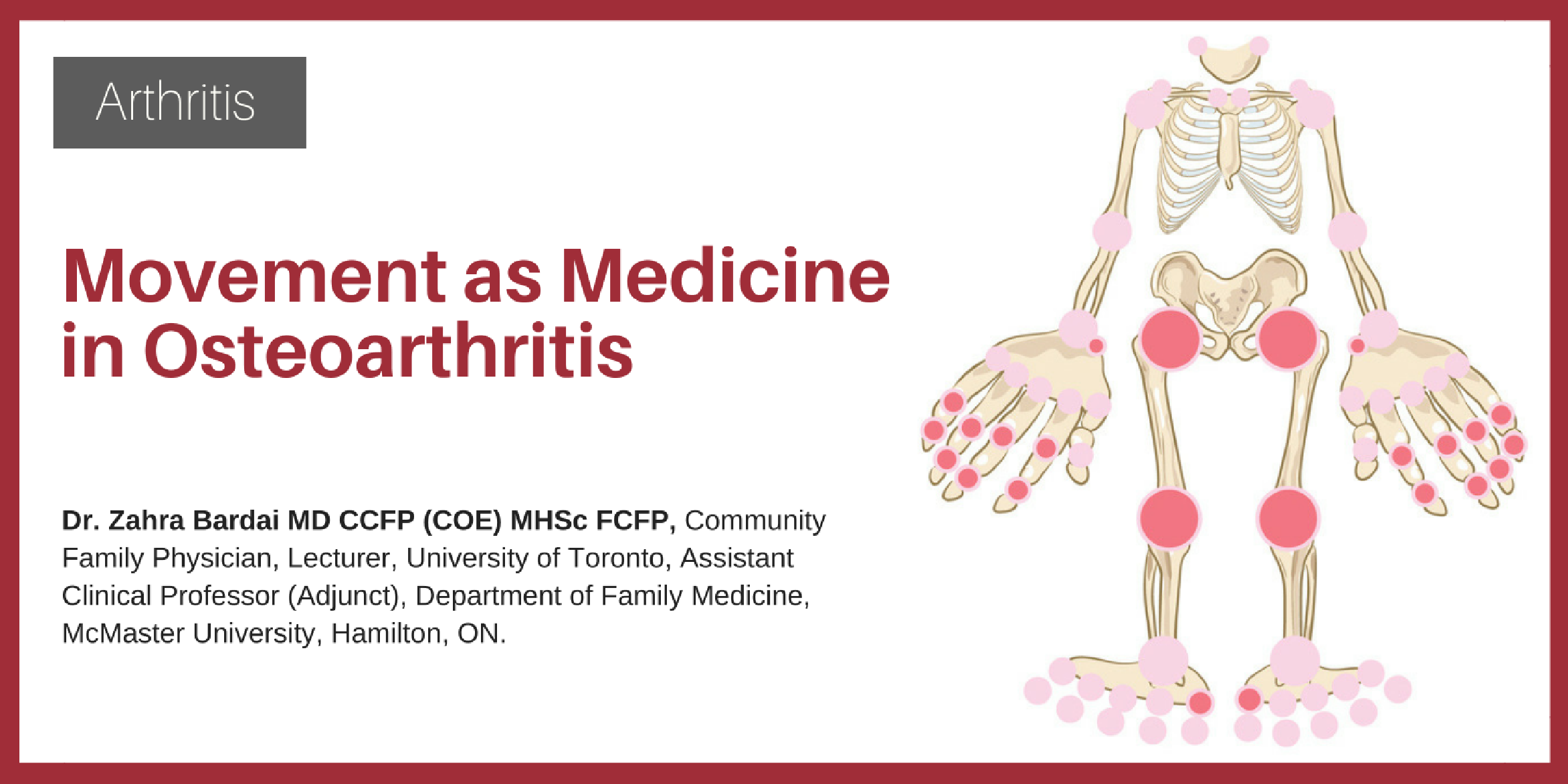
Dr. Zahra Bardai MD CCFP (COE) MHSc FCFP,
Community Family Physician, Lecturer, University of Toronto, Assistant Clinical Professor (Adjunct), Department of Family Medicine, McMaster University, Hamilton, ON.
| Abstract: Osteoarthritis is a prevalent health condition that affects millions of people worldwide. Increasingly, there has been a growing body of international recommendations emphasizing non-pharmacologic interventions using physical activity to modify joint mechanics. Discussion will focus on pathophysiology of joint mechanics as it relates to physical activity as well as the use of specific clinical strategies that can be incorporated into physical activity counseling in osteoarthritis management. |
| Key Words: Osteoarthritis, Physical Activity, Exercise Vital Sign, Exercise Prescription. |
| Osteoarthritis is a leading source of nonfatal health burden |
| Non-pharmacologic treatments of osteoarthritis focus on modifiable factors in joint mechanics |
| Osteoarthritis is a structural and functional failure of joints |
| Movement and physical activity have protective effects on osteoarthritic joints |
| The Exercise Vital Sign should become incorporated into assessments for preventative health and chronic disease including osteoarthritis. |
| The Exercise Prescription tool can help clinicians formally prescribe exercise as a treatment for their patients. |
| To have access to full article that these tools were developed for, please subscribe. The cost to subscribe is $80 USD per year and you will gain full access to all the premium content on www.healthplexus.net, an educational portal, that hosts 1000s of clinical reviews, case studies, educational visual aids and more as well as within the mobile app. |
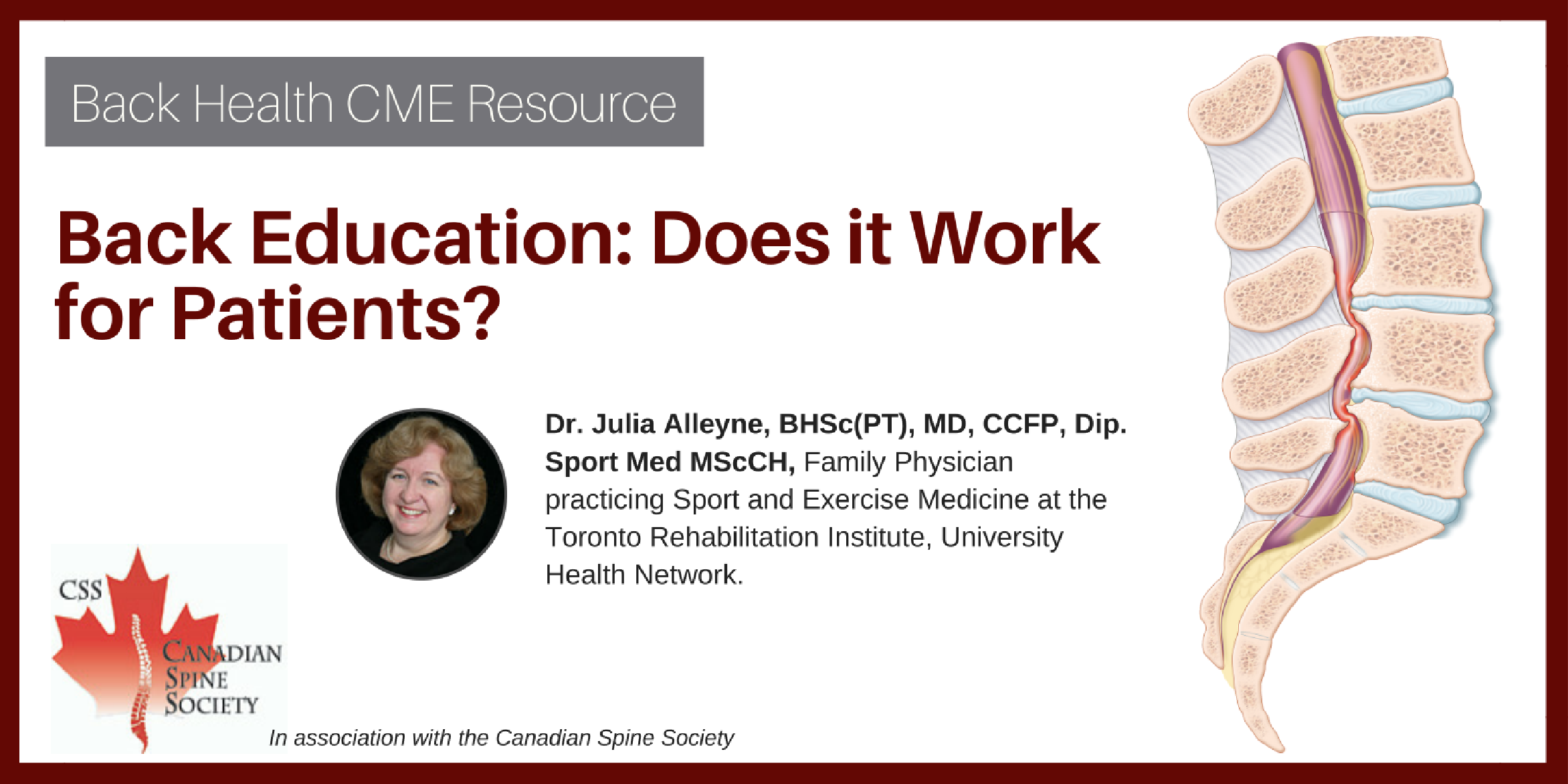
Dr. Julia Alleyne, BHSc(PT), MD, CCFP, Dip. Sport Med MScCH,
Family Physician practising Sport and Exercise Medicine at the Toronto Rehabilitation Institute, University Health Network. She is appointed at the University of Toronto, Department of Family and Community Medicine as an Associate Clinical Professor.
| Abstract: Back education or “Back Schools” are used both as a method of prevention and, in conjunction with traditional rehabilitation and exercise programs, as a component in treatment of recurrent or persistent low back pain. It is challenging to evaluate the effectiveness of this educational effort. Models have varied from brochures, booklets and simple office conversations to formal scheduled classes. Content has ranged from purely mechanical instruction to complex cognitive behavioural therapy. Essential to success is the ability to integrate the instructions into activities of daily living. The composition of those lessons remains the subject of continuing debate. |
| Key Words: Back School, education, body mechanics, prevention, pain management. |
Members of the College of Family Physicians of Canada may claim MAINPRO-M2 Credits for this unaccredited educational program.
www.cfpc.ca/Mainpro_M2
You can take quizzes without subscribing; however, your results will not be stored. Subscribers will have access to their quiz results for future reference.

| Back education programs do not reduce the frequency or severity of future back pain attacks. |
| The educational message should be consistent, frequent and stress self-management. |
| Group education is useful but the message must be tailored to the individual. |
| Information must be integrated into the patient's daily routine. |
| Back education should be part of rehabilitation and is probably most effective during the sub-acute phase of recovery when the pain is still present but not so distracting that it prevents learning. |
| Comprehensive back school includes spinal anatomy, instruction in proper body mechanics, individualized pain control techniques plus the recognition and treatment of pain disorder through cognitive behavioural therapy when required. |
| The back program should follow the precepts of adult education with frequent interaction, problem solving, practical applications and a focus on participation. |
| A successful back school educates the patient about the benign nature of back pain and provides the tools to transfer knowledge about back hygiene into practice in the patient's life. |
| To have access to full article that these tools were developed for, please subscribe. The cost to subscribe is $80 USD per year and you will gain full access to all the premium content on www.healthplexus.net, an educational portal, that hosts 1000s of clinical reviews, case studies, educational visual aids and more as well as within the mobile app. |

I have often talked about how important stories are when it comes to medical care. We must, of course, use the best available medical knowledge to benefit our patients, but I believe it is also important to find the humanistic aspects of care and build on them, in order to foster human relationships.The importance of learning the patient’s personal story is key to achieving this goal.
Rebeca Pinca, MD,1 Joseph M. Lam, MD, FRCPC,2
1Department of Dermatology & Skin Science, University of British Columbia, BC.
2Clinical Assistant Professor, Department of Pediatrics and Dermatology, University of British Columbia, BC.
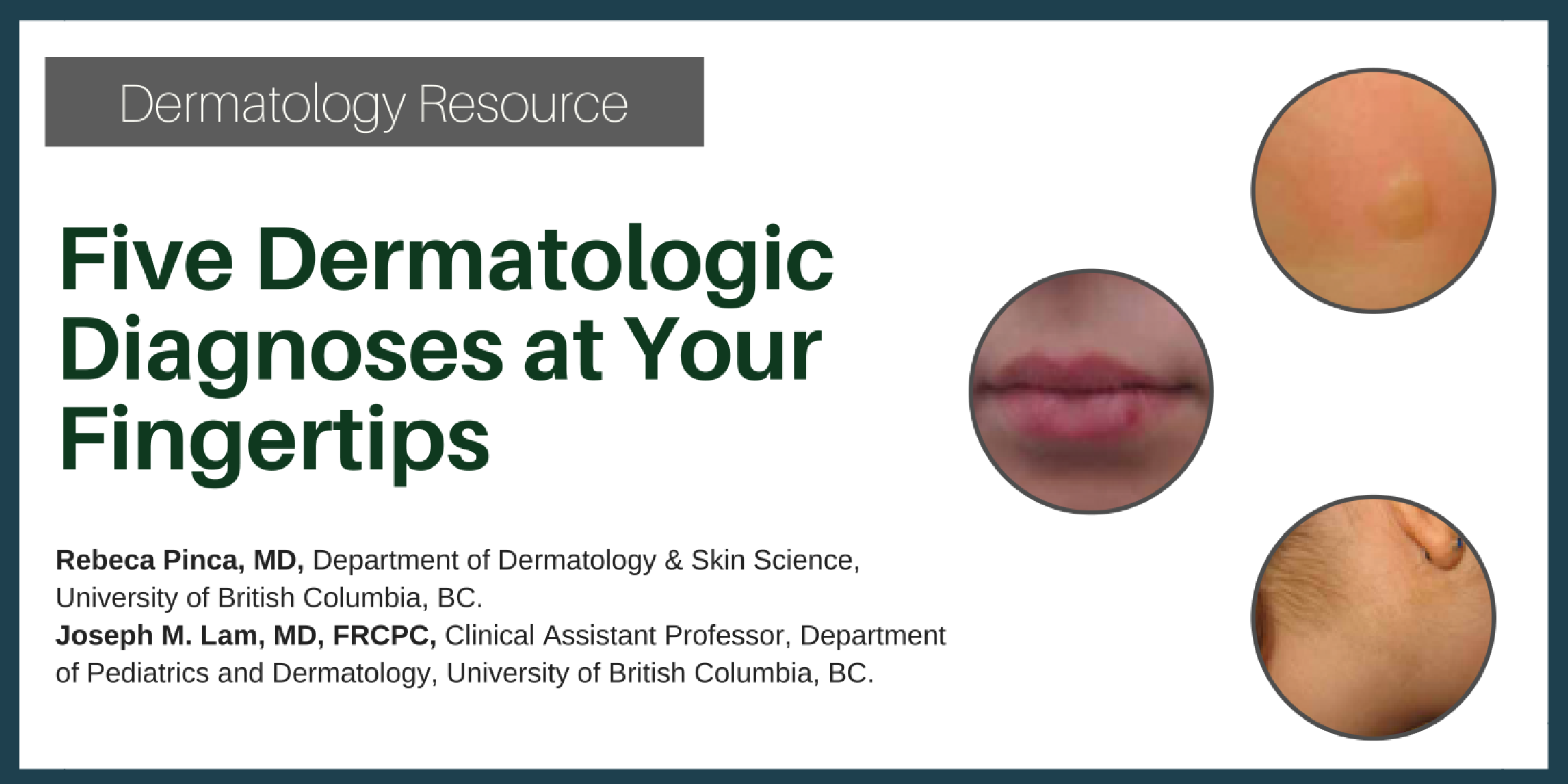
Abstract: Dermatology is a visual specialty, yet palpation can also play an important diagnostic role. We present five dermatologic diagnoses that can be made at point of care by palpation or physical manoeuvres, potentially reducing unnecessary investigations, such as biopsies.  |
| Key Words: Dermatofibromas, pilomatricomas, mastocytomas, spider angiomas, terra firma-forme dermatitis. |
| Dermatofibromas and pilomatricomas are benign papulonodular lesions that can be differentiated by the dimple sign, and the teeter-totter sign or tent sign, respectively. |
| Solitary mastocytomas can be diagnosed by Darier sign, whereby rubbing of the lesion causes a wheal and pruritus. |
| Spider angiomas can be diagnosed by diascopy, which involves the application of gentle downward pressure with a glass slide on the skin, resulting in blanching of the telangiectasia. |
| Terra firma-forme dermatitis is a benign discoloration that can be diagnosed, and treated, by gentle rubbing with isopropyl alcohol. |
| These dermatologic physical examination manoeuvres are quick, cost-effective, point-of-care diagnostic tools. |
| If in doubt, do not hesitate to biopsy lesions that appear suspicious. |
| To have access to full article that these tools were developed for, please subscribe. The cost to subscribe is $80 USD per year and you will gain full access to all the premium content on www.healthplexus.net, an educational portal, that hosts 1000s of clinical reviews, case studies, educational visual aids and more as well as within the mobile app. |


