
Disclaimer: While every attempt is made to ensure that drug dosages provided within the text of this journal and the website are accurate, readers are urged to check drug package inserts before prescribing. Views and opinions in this publication and the website are not necessarily endorsed by or reflective of those of the publisher.
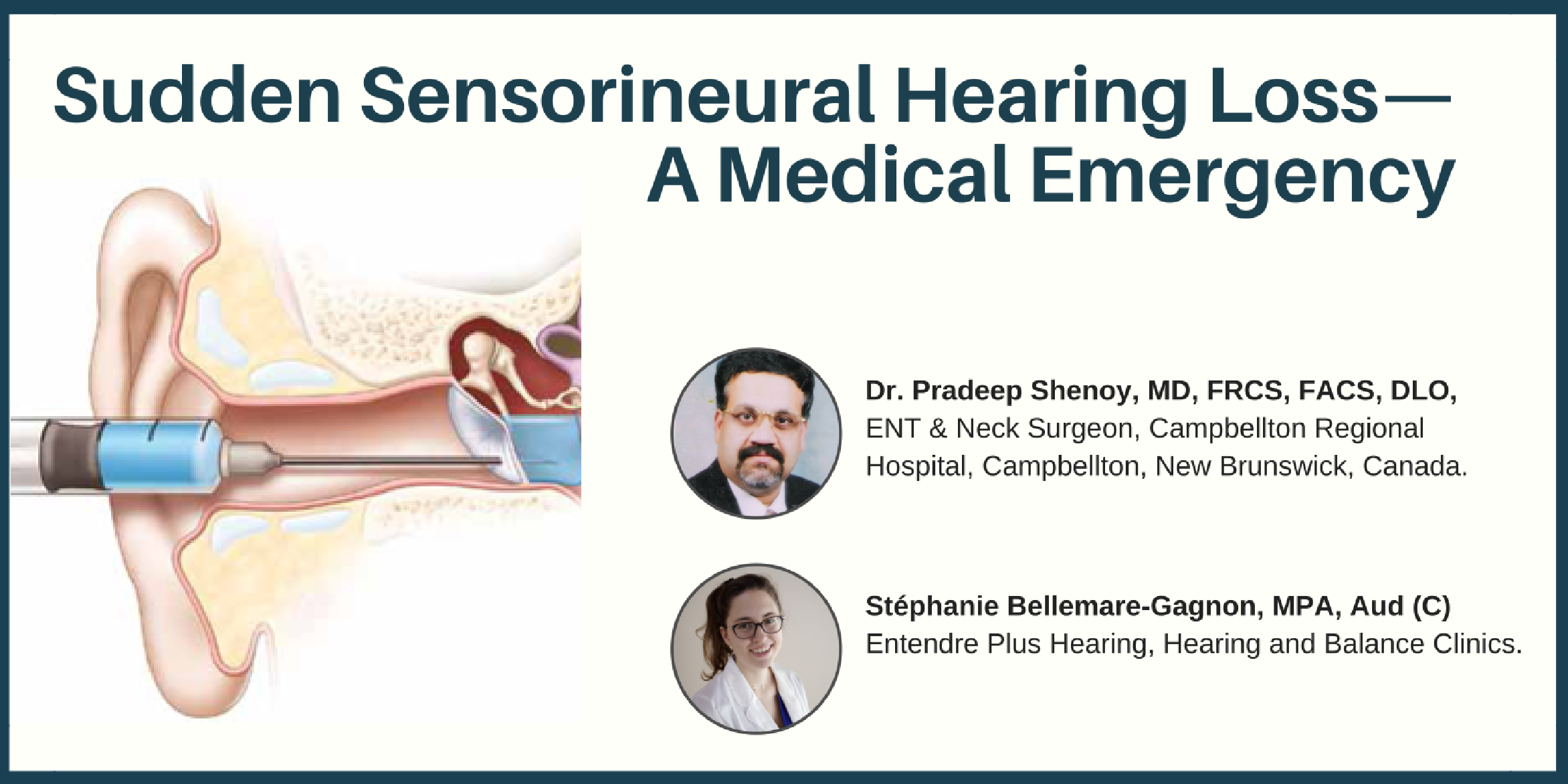
Dr. Pradeep Shenoy, MD, FRCS, FACS, DLO,1 Stéphanie Bellemare-Gagnon, MPA, Aud (C)2
1ENT & Neck Surgeon, Campbellton Regional Hospital, Campbellton, New Brunswick, Canada.
2Entendre Plus Hearing, Hearing and Balance Clinics.
CLINICAL TOOLS
| Abstract: Sudden hearing loss—usually unilateral and rarely bilateral—can be associated with tinnitus and vertigo. In most cases it is idiopathic, although various explanations such as infective, vascular, and immune causes have been postulated. We have reviewed the literature and what follows is a survey of current research and suggested treatments for sudden hearing loss. |
| Key Words: sudden sensorineural hearing loss (SSNHL), tinnitus, pure tone audiogram (PTA), acoustic brainstem response audiometry (ABRA), viral neuritis, vascular insufficiency, oral steroids, intratympanic steroids, antiviral treatment, hyperbaric oxygen therapy (HBOT), MRI brain, acoustic neuroma. |


| All patients with SSNHL should be assessed by taking a thorough history and performing a complete examination to identify any specific disease. |
| PTA should be performed in all patients. |
| Targeted laboratory investigations should be performed after the initial assessment. |
| All patients should have an MRI of the brain if a CT SCAN of the brain is contraindicated; ABR testing should also be considered. |
| If a specific cause for SSNHL is found, the patient should be managed accordingly. |
| If SSNHL is idiopathic in nature, patients may be offered a course of oral steroids. |
| If oral steroids are contraindicated, IT steroid therapy could be considered as a primary or salvage therapy. |
| Use of antivirals, HBOT, vasodilators, and vasoactive agents are not currently supported by the research. |
| To have access to full article that these tools were developed for, please subscribe. The cost to subscribe is $80 USD per year and you will gain full access to all the premium content on www.healthplexus.net, an educational portal, that hosts 1000s of clinical reviews, case studies, educational visual aids and more as well as within the mobile app. |
Why Families Should Consider Forgoing CPR
Deck
Physicians usually become adept at choosing medications for the complaints and illnesses that patients bring to their attention.
Thumbnail Image


It happens a few times a month: I get a request for a meeting with a family struggling whether or not to provide a do not resuscitate (DNR) order for a frail and aged family member. Often the patient has dementia, and, therefore, the decision falls to the formal substitute decision maker (SDM), in keeping with the Health Care Consent Act in Ontario (and comparable legislation elsewhere).
Topic
Section
Keyword
- Read more about Why Families Should Consider Forgoing CPR
- Log in or register to post comments
Editor's Note, Volume 6 Issue 6

D’Arcy Little, MD, CCFP, FRCPC
Medical Director, JCCC and HealthPlexus.NET

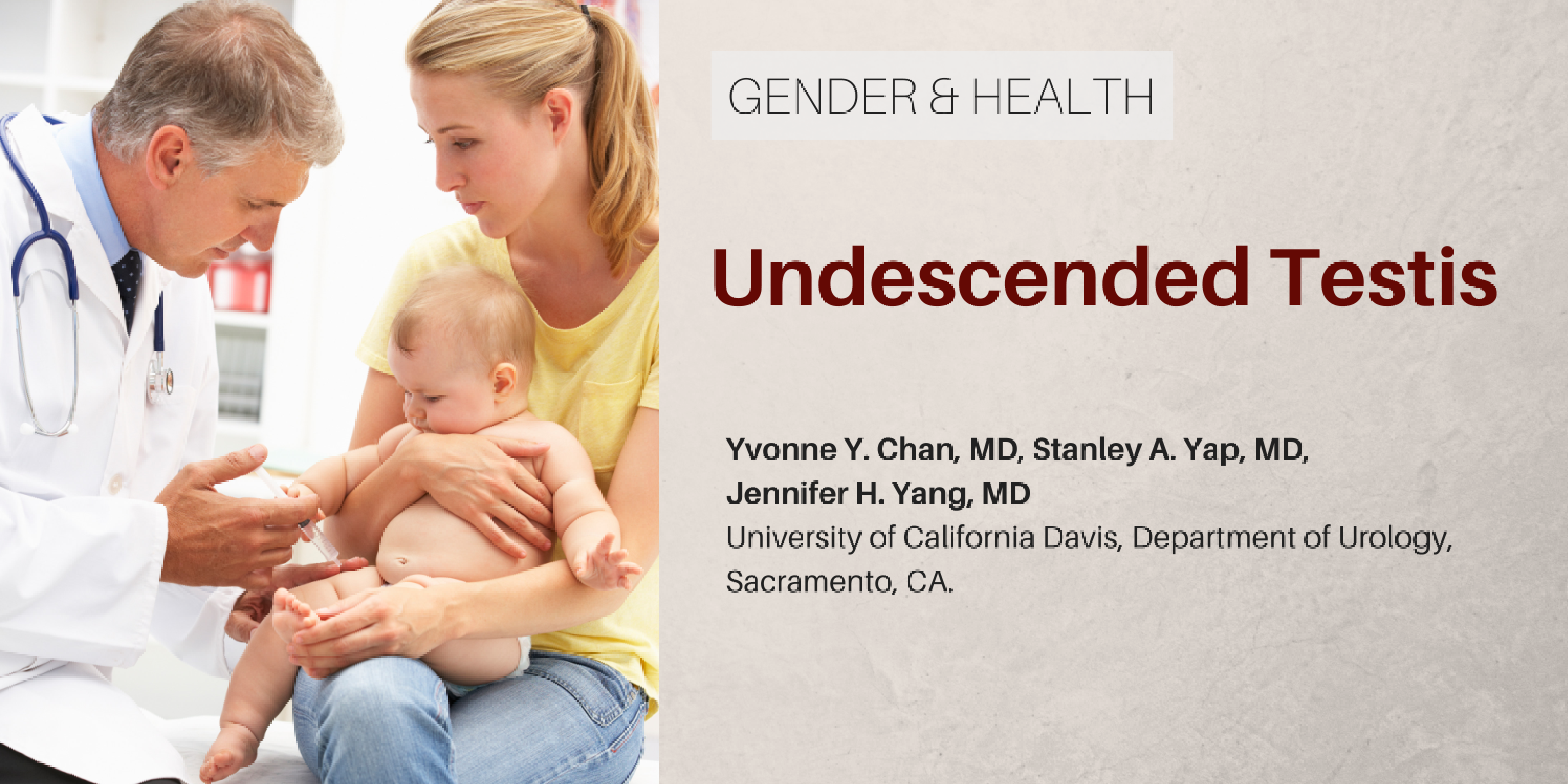
Yvonne Y. Chan, MD, 1 Stanley A. Yap, MD, 1Jennifer H. Yang, MD1
1University of California Davis, Department of Urology, Sacramento, CA.
CLINICAL TOOLS
| Abstract: Undescended testis is the most common genitourinary anomaly in boys and is found in 2-4% of those born full term and 20-30% of those born premature. Spontaneous descent occurs in 50-70% of cases. Physical exam is critical and sufficient in the diagnosis and characterization of testicular location. As such, imaging is not necessary prior to referral to pediatric urology as it will not affect management. Testicular maldescent impairs spermatogenesis and increases risk for testicular germ cell tumors, so timely diagnosis and intervention are key. |
| Key Words:undescended testis, cryptorchidism, orchiopexy. |
Members of the College of Family Physicians of Canada may claim MAINPRO-M2 Credits for this unaccredited educational program.
www.cfpc.ca/Mainpro_M2You can take quizzes without subscribing; however, your results will not be stored. Subscribers will have access to their quiz results for future reference.


| Undescended testis affects spermatogenesis and increases risk for testicular cancer and infertility. |
| Initiate workup for disorders of sexual development in cases of bilateral, undescended, and nonpalpable testes. |
| For cases of congenital undescended testis, refer to pediatric urology if the testis remains undescended by 6 months of age (corrected for gestational age). |
| Imaging is not necessary prior to referral to pediatric urology. |
| Patients with bilateral undescended and nonpalpable testicles require DSD workup. |
| Physical exam is sufficient for determining the location of an undescended testis, and ultrasound is not necessary prior to referral to pediatric urology. |
| To have access to full article that these tools were developed for, please subscribe. The cost to subscribe is $80 USD per year and you will gain full access to all the premium content on www.healthplexus.net, an educational portal, that hosts 1000s of clinical reviews, case studies, educational visual aids and more as well as within the mobile app. |
Yoga Raja Rampersaud, MD, FRCSC,1 Dr. Hamilton Hall, MD, FRCSC,2
1Associate Professor Department of Surgery, University of Toronto, Divisions of Orthopaedic and Neurosurgery University Health Network Medical Director, Back and Neck Specialty Program, Altum Health, Past President Canadian Spine Society.
2is a Professor in the Department of Surgery at the University of Toronto. He is the Medical Director, CBI Health Group and Executive Director of the Canadian Spine Society in Toronto, Ontario.
CLINICAL TOOLS
| Abstract: The majority of the patients referred for surgical consultation are not candidates for surgery. Appropriate operative candidates endure unnecessary and potentially detrimental delays in obtaining their surgery while the rest waste time waiting to be told that surgery is not the answer. The Canadian Spine Society surveyed its membership to establish a set of practical surgical referral recommendations for non-emergent spinal problems. The results support referrals of patients with leg or arm dominant pain but, in the absence of a significant structural abnormality, discourage referring patients with neck or back dominant symptoms. |
| Key Words: spine surgery, indications, referral, clinical presentations, non-emergent. |
Members of the College of Family Physicians of Canada may claim MAINPRO-M2 Credits for this unaccredited educational program.
www.cfpc.ca/Mainpro_M2You can take quizzes without subscribing; however, your results will not be stored. Subscribers will have access to their quiz results for future reference.


| There is no universally acceptable ideal candidate, absolute indication or unqualified contraindication for elective spinal surgery. |
| Referral is recommended most often for patients who have constant arm or leg dominant pain. |
| Patients who have untreated neck or back dominant pain are not appropriate surgical referrals. |
| Surgeons insistence on an image or refusal to see a suitable patient who rejects surgery reflect the excessive demand on their time, which can be relieved with proper referral. |
| The recommendation for referral is highest when the patient has had aappropriate non-operative treatment: well supervised physical therapy, suitable medication, effective education and successful lifestyle modification. |
| Spine related arm and leg dominant pain are usually the result of specific nerve root pathologies and therefore are more likely amenable to surgical intervention than back or neck pain which are generally multifactorial. |
| Patients with disabling or progressive neurological deficits should be referred early; patients with little or no pain and with no functional limitation related to the neurological deficit are not recommended for referral. |
| To have access to full article that these tools were developed for, please subscribe. The cost to subscribe is $80 USD per year and you will gain full access to all the premium content on www.healthplexus.net, an educational portal, that hosts 1000s of clinical reviews, case studies, educational visual aids and more as well as within the mobile app. |