Disclaimer:  While every attempt is made to ensure that drug dosages provided within the text of this journal and the website are accurate, readers are urged to check drug package inserts before prescribing. Views and opinions in this publication and the website are not necessarily endorsed by or reflective of those of the publisher.

Dr. Safraz Mohammed1 Dr. Robert Ravinsky2 Dr. Albert Yee3

1University of Ottawa, Neurosurgery, Ottawa Civic Hospital, Ottawa, ON.
2,3University of Toronto, Division of Orthopaedics, Department of Surgery; Holland Musculoskeletal Program and Division of Orthopaedic Surgery, Sunnybrook Health Sciences Centre, Toronto, ON.

CLINICAL TOOLS

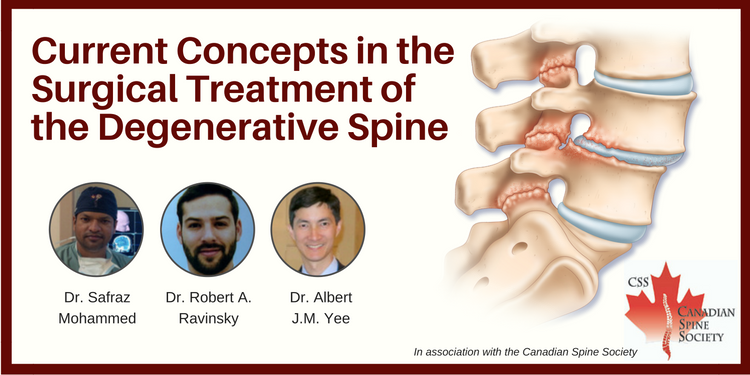
Abstract: Degenerative conditions of the spine are a major cause of disability, and represent a large economic burden on the health care system. In this review, we have described some of the most common degenerative pathologies of the lumbar spine—low back pain, spinal stenosis, degenerative spondylolisthesis, lumbar disc herniation and cauda equina syndrome—and the diagnostic approach and immediate management from the perspective of the primary care physician. We have emphasized clinical pearls seen in these conditions and specific indications for surgical referral, as well as red flags that should prompt urgent referral for life-threatening entities, such as malignancy and infection.
Key Words: degenerative spine, surgery, lumbar disc herniation, spinal stenosis, spondylolisthesis, radiculopathy.

Members of the College of Family Physicians of Canada may claim MAINPRO-M2 Credits for this unaccredited educational program.

www.cfpc.ca/Mainpro_M2

You can take quizzes without subscribing; however, your results will not be stored. Subscribers will have access to their quiz results for future reference.

1. Evaluate for hip and knee joint pathology, and vascular pathology, especially in older patients presenting with unilateral radiating leg symptoms.
2. Spine surgery is more successful in treating leg dominant pain symptoms than back dominant mechanical pain symptoms.
3. Screen every patient presenting with a lumbar spine complaint for concomitant cervical and thoracic stenosis, in particular looking for evidence of cord compression (i.e. myelopathy). Be suspicious in patients with bilateral leg symptoms.
Clinicians should ensure that a focused history and a thorough physical examination is performed to help place patients with low back pain into several key categories: (a) nonspecific low back pain (Pattern I or II), (b) back pain potentially associated with radiculopathy leg symptoms (Pattern III) or leg claudication from structural spinal stenosis (Pattern IV), or (c) back pain potentially associated with another specific spinal cause (i.e. red flags). The history should also include assessment of psychosocial risk factors, which predict risk for chronic disabling back pain.3
Unless there are red flag symptoms or signs, routine imaging or other diagnostic tests in patients with acute nonspecific low back pain is not required.3
Diagnostic imaging and special investigations in patients with low back pain in the presence of severe or progressive neurologic deficits or when serious underlying conditions are suspected on the basis of history and physical examination.
Surgery can be helpful for patients with leg dominant symptoms (sciatica/radiculopathy, Pattern III) or leg claudication from spinal stenosis (Pattern IV). There is a limited role for surgery for back pain dominant symptoms in the absence of specific structural correlative pathology (i.e. Pattern I or II).3
Approximately 15% of patients with lumbar spinal stenosis will have concurrent cervical or thoracic canal stenosis. One must screen for the presence of upper motor neuron signs and symptoms. Degenerative lumbar stenosis always presents without upper motor findings but may occasionally have focal root compression signs.
To have access to full article that these tools were developed for, please subscribe. The cost to subscribe is $80 USD per year and you will gain full access to all the premium content on www.healthplexus.net, an educational portal, that hosts 1000s of clinical reviews, case studies, educational visual aids and more as well as within the mobile app.

Editor's Note, Volume 6 Issue 3

D’Arcy Little, MD, CCFP, FRCPC
Medical Director, JCCC and HealthPlexus.NET

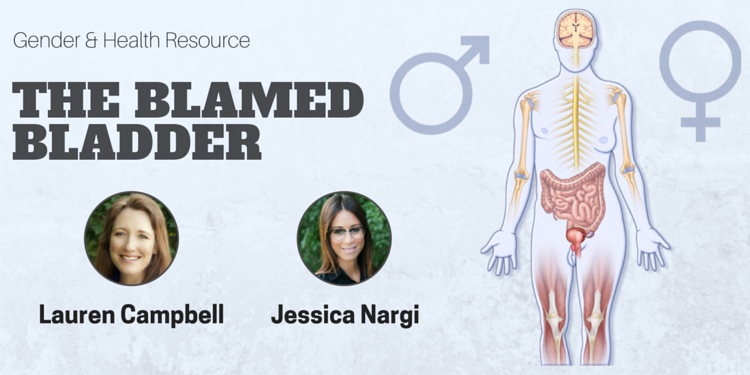
Lauren Campbell, PT, MScPT, MCPA,1 Jessica Nargi, PT, MScPT, MCPA,2

1Registered Physiotherapist, Pelvic Health Physiotherapy on Bay, Toronto, ON.
2 Registered Physiotherapist, Pelvic Health LifeMark Physiotherapy, Toronto, ON.

CLINICAL TOOLS

Abstract: Bladder pain syndrome/interstitial cystitis (BPS/IC) is associated with symptoms of urgency, frequency, and pain in the bladder or pelvis, in the absence of infection or disease. While manual therapy skills performed by a specialized pelvic floor physiotherapist can improve pain and symptoms by as much as 75-80%,23 treatment strategies need to look beyond, because the persistent nature of this condition suggests there is also dysfunction occurring within the peripheral and central nervous systems. Other symptom-improving treatments include bladder retraining, neurophysiology-based pain education, mindfulness meditation, and a variety of other strategies to help quiet their hypersensitive nervous systems.
Key Words: bladder pain syndrome, interstitial cystitis, pelvic floor physiotherapy, biopsychosocial framework, neurophysiology-based pain education, central sensitization.

Members of the College of Family Physicians of Canada may claim MAINPRO-M2 Credits for this unaccredited educational program.

www.cfpc.ca/Mainpro_M2

You can take quizzes without subscribing; however, your results will not be stored. Subscribers will have access to their quiz results for future reference.

Identify research and treatment for BPS/IC need to be beyond the bladder.
Understand a pelvic physiotherapist's assessment and treatment framework for BPS/IC.
Understand the importance of tissue dysfunction and central sensitization in BPS/IC.
Use a biopsychosocial framework when approaching BPS/IC
The bladder is likely not "at fault" and given the persistent nature of symptoms, one must consider the whole body.
Pelvic floor physiotherapy is MORE than manual treatment and exercise prescription
Physiotherapists have an excellent knowledge base, dynamic skill set, and also have the time required to educate and help implement behavioural modifications.
To have access to full article that these tools were developed for, please subscribe. The cost to subscribe is $80 USD per year and you will gain full access to all the premium content on www.healthplexus.net, an educational portal, that hosts 1000s of clinical reviews, case studies, educational visual aids and more as well as within the mobile app.

Metal Implants and Travel

Author(s)
Deck
It is the age of the bionic person…
Thumbnail Image
Teaser

Many older patients of mine have metal implants in their limbs following some form of reconstructive surgery…

Many older patients of mine have metal implants in their limbs following some form of reconstructive surgery. It is the age of the bionic person.

With so many "snowbirds" and with security metal detectors almost everywhere, there is often an expressed concern about whether having a metal implant in the hip or knee might delay you or lead to problems when you pass through airport or cruise security metal detectors.

Section

Heidi Godbout, MD,1 Sean Christie, MD, FRCSC,2

1Dalhousie University, Dept. Surgery (Neurosurgery), Dept. Medical Neurosciences.
2Associate Professor, Dalhousie University, Dept. Surgery (Neurosurgery).

CLINICAL TOOLS

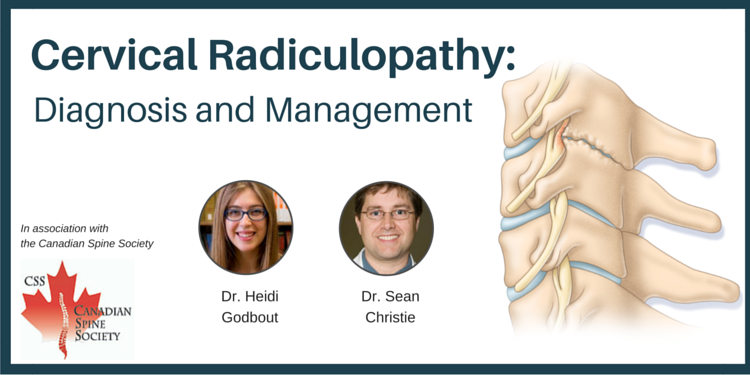
Abstract: Neck and arm pain are common reasons to seek medical attention, especially in the working population. However, there are several diagnostic pitfalls that must be avoided. Appropriate, conservative management will lead to improvement in a significant number of patients. Knowing when to refer a patient as well as what imaging modalities are indicated is crucial to managing cervical radiculopathy in the primary care setting. The purpose of this review is to help primary care physicians diagnose, investigate and treat cervical radiculopathy and to know when a surgical referral is appropriate.
Key Words: Cervical radiculopathy, neurological exam, imaging, conservative treatment, surgery.

Members of the College of Family Physicians of Canada may claim MAINPRO-M2 Credits for this unaccredited educational program.

www.cfpc.ca/Mainpro_M2

You can take quizzes without subscribing; however, your results will not be stored. Subscribers will have access to their quiz results for future reference.

1. Cervical pain is a common clinical problem; pure cervical radiculopathy is much less frequent.
2. The natural history of cervical radiculopathy is favorable; most patients improve within 3 months.
3. Imaging is only required if there are indications of sinister, non-mechanical pathology or when surgery is being contemplated.
4. Surgery produces beneficial results in 85-90% of cases.
1. A well-constructed musculoskeletal and neurological history and physical examination can distinguish between mechanical neck pain, cervical radiculopathy, cervical myelopathy or shoulder pathology.
2. C5-6 and C6-7 are the most common levels affected.
3. C6 radiculopathy leads to numbness in the thumb and weakness in wrist extension.
4. C7 radiculopathy leads to numbness in the middle finger and triceps weakness.
5. Spurling's manoeuver can be used to reproduce radicular symptoms. It should not be used when myelopathy is suspected.
To have access to full article that these tools were developed for, please subscribe. The cost to subscribe is $80 USD per year and you will gain full access to all the premium content on www.healthplexus.net, an educational portal, that hosts 1000s of clinical reviews, case studies, educational visual aids and more as well as within the mobile app.